

Transcript of the episode: https://www.youtube.com/watch?v=X9mMmCDsQXs
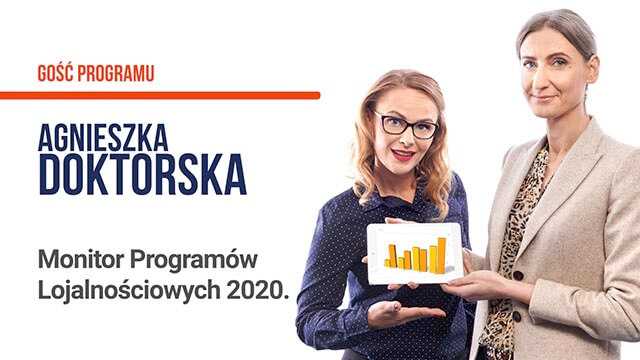
Loyalty Programme Monitor 2020 – Agnieszka Doktorska
KN: Good evening. Joining me on tonight’s episode of ‘Loyalty Schemes by Night’ is Ms Agnieszka Doktorska.
Ms Agnieszka, let’s explain why you’re here with me today of all days.
AD: Good evening. My name is Agnieszka Doktorska and I am a Senior Project Manager at ARC Rynek i Opinie. I have the pleasure of working on the Loyalty Programme Monitor survey, and that is what we will be discussing today.
KN: Perhaps we could explain to our viewers what the Loyalty Programme Monitor survey is. What we survey and how we do it.
AD: The Loyalty Programme Monitor Survey is a survey conducted amongst consumers to gauge their perceptions – specifically, consumers’ perceptions of the loyalty programme market. The survey is carried out in two stages. First, we conduct a telephone survey amongst a representative sample to ascertain the take-up of loyalty programmes; that is, we ask respondents whether they participate in a programme and, if so, which one. Then, in the second part of the survey, at the second stage, we carry out an online questionnaire survey, and at this stage our sample consists solely of users of loyalty programmes – that is, people who participate in at least one loyalty programme.
KN: And who is this study intended for?
AD: The target audience for the research – or, more precisely, the report we are selling – consists of people from companies that run consumer loyalty schemes. These are the people responsible for customer relations within their companies and who manage the loyalty scheme.
KN: The name itself suggests that we’re looking into loyalty schemes, but it can’t be quite that simple. There’s certainly more to it than that.
AD: It’s not straightforward, and in fact we’re not researching loyalty schemes as such; we’re looking at the consumer’s perspective – that of the people who take part in loyalty schemes. We ask these people about the pros and cons and how they perceive the loyalty schemes they’re part of. We ask about their satisfaction with loyalty schemes, and we ask about the impact of taking part in a loyalty scheme on their purchasing behaviour: whether the fact that a person is a member of a particular loyalty programme has any bearing on whether they buy products from that brand more frequently, and what this entails – so that, broadly speaking, is the scope of the research.
KN: And do we also look at the context of where loyalty scheme users live – whether they live in towns with a population above or below a certain threshold, or in rural areas – does that matter too, and does age matter?.
AD: What I mean is that, as far as the design of our sample is concerned, it is representative, so our survey covers all respondents. Their composition mirrors that of the Polish population, so we include residents of rural areas, residents of medium-sized towns, and residents of large cities. We have appropriate age groups and are conducting the survey with people aged 18 and over. As for participation in loyalty schemes itself, and how certain characteristics influence whether people from these groups are more likely to take part in such schemes or not, such correlations certainly do exist. Among other things – as you mentioned – these include variables relating to the size of the place of residence; age, of course, also influences the willingness to participate in loyalty programmes, as does gender. I can reveal that women are more likely to participate in loyalty programmes.
KN: And do we also look at who uses the mobile app and who still uses the plastic card – the original version – when it comes to the loyalty scheme?
AD: Yes, yes, absolutely. A very important indicator in our study is whether people are using the mobile app – and, as we’ve observed, this is a major trend. Mobile app usage is constantly on the rise. It’s simply an easy and useful tool for using the programme.
KN: It’s just like in any other industry – the internet is now replacing traditional solutions, and the same is true of loyalty schemes.
AD: Exactly. We also know from previous editions of our survey that the main issues respondents highlighted a few – or a dozen or so – years ago were that they had too many cards in their wallets, or that they would sometimes simply forget to bring a particular card with them when shopping. And then, in a given shopping situation, it’s impossible to use a particular loyalty scheme, so the fact that we’re moving away from cards and towards mobile apps on our phones – which we always have with us – makes it much easier to use loyalty schemes.
KN: How long does this sort of examination take?
AD: As for the telephone survey I mentioned, which is based on a representative sample, it is a very short survey. We ask respondents just a few questions: whether they take part in a loyalty scheme, which schemes they are in, and how actively they use them. In the second part, however – the second stage of the survey – the questionnaire that respondents complete is longer. This is because it covers issues relating specifically to purchasing behaviour and the evaluation of loyalty programmes, so this questionnaire takes around twenty minutes to complete.
KN: And you check not only who is using loyalty schemes and where they are using them, but also whether they are satisfied with the scheme.
AD: Exactly. An important part of our report, our research, is the question of user satisfaction. This general satisfaction, as I mentioned earlier, relates to the pros and cons of loyalty schemes, but also to satisfaction with the specific schemes they use. We ask, for example, whether a participant has a favourite scheme amongst those they use. We ask how they rate their satisfaction with participating in a given programme on a scale. And here, year on year, we can also see certain trends and changes in the market. Our clients can also check whether their marketing and communication activities, as well as changes to the mechanisms within their loyalty programmes, are having an impact on this satisfaction or not.
KN: Can we say that such a report is essential for us if we want to operate in the loyalty schemes market as a company?
AD: I think so, I think it’s very useful. Thanks to this report and the results, we can analyse market trends. And, in a way, make decisions based on them.
KN: So let’s go back to the history for a moment, because in one of the previous episodes I spoke to Tomasz Makaruk, who said that loyalty programmes have been around in Poland for about 20 years. Is the situation similar when it comes to the Loyalty Programme Monitor survey, or is the story behind it more or less the same?
AD: Yes, we do have a very long history of conducting this survey. We have been running the Loyalty Programme Monitor under that name since 2011, so this year marked our tenth anniversary edition. Previously, however, we covered the topic of loyalty programmes as part of a survey called the BTL Monitor. In that survey, we combined promotion, the promotions market, promotional competitions and, indeed, loyalty programmes. Over time, we also noticed that these loyalty programmes were becoming increasingly significant. The range of topics we could ask respondents about was growing ever wider, so we decided to split these two, as it were, topics into two separate surveys. We now offer our clients the Loyalty Programme Monitor and the Promotions Monitor, in which they will find information on the perception of promotions and participation in promotions organised on the market and aimed at consumers. Returning to the BTL Monitor – we have been conducting this survey since 2005, which means…
KN: So it’s even older.
AD: Even longer than that, yes – it really has been a very long period during which we’ve been monitoring the promotions market and the loyalty schemes market. Interestingly, right now – and in fact this has been the case from the very beginning – the largest share of the loyalty programme market has been accounted for by programmes run by hypermarket and supermarket chains, as well as petrol stations. However, it’s worth noting that mobile phone operators were in third place in 2005; now, however, we’re seeing a complete shift – a sort of restructuring of the mobile phone market – and at this point loyalty schemes are virtually non-existent there, whereas back in 2005 they accounted for the third-largest share of loyalty programmes.
KN: Ms Agnieszka, I’d just like to invite our viewers to watch the episode I mentioned. It’s one of the very first episodes, in which we discussed loyalty programmes. I’d even go so far as to say it was the very first one. You’ll find the link at the bottom of the episode description, and we invite you to familiarise yourselves with the concept of loyalty programmes right from the start. And now I’d like to ask you about the recurring themes that appear in every survey. I’m sure there’s something that hasn’t changed for years.
AD: Yes, absolutely. It’s fair to say that this basic perception of loyalty programmes remains largely unchanged. What users of loyalty programmes expect also remains, in a sense, at a constant level. Respondents, when asked, naturally expect benefits. There are many trends that do indeed change, and this is clearly evident when comparing the year-on-year results in our survey.
KN: Let’s talk about what Poles expect. As an expert, could you share with us a tip for success when it comes to a loyalty scheme?.
AD: It’s very difficult, yes. Because, of course, everyone expects something different depending on their circumstances and their preferences. We also have loyalty schemes in various sectors, and we use them in different ways when we’re out shopping. There are frequent purchases, such as those at retail chains or petrol stations. There are also purchases that are made less often, so here the ‘golden mean’ is somewhat hard to strike. Of course, there’s no set formula for success when it comes to a loyalty programme, but we can identify certain trends and expectations amongst respondents beyond simply expecting benefits from the programme.These are also emotional expectations – the sort you don’t really think about at first glance – that the programme can offer something special and reinforce a customer’s sense of uniqueness.
KN: And the report is published once a year. Could you give us a glimpse behind the scenes? Because, as the recipients of the report, we only ever see the final result. How do you prepare for it?
AD: Yes, absolutely. The survey is carried out once a year, usually during the summer holidays, so that the report is ready by the end of September. Here’s how it works: at the start – around June – we inform our clients that the next edition of the survey is planned. At this stage, if clients decide to purchase the report, they also have some influence over the questions we ask respondents. They can also suggest certain questions. If these are of interest to other clients, we naturally include them. There is also the option to commission exclusive questions prior to the survey being carried out; that is, if a company is interested in asking a question for which it expects answers solely for its own use – whether amongst users of its own loyalty programme or otherwise – this option is certainly available before our survey is carried out, prior to each edition.
KN: Ms Agnieszka, you didn’t accept the invitation to our programme for no reason – it’s because I 360 supports and works with your company, isn’t that right?
AD: Yes, absolutely. We work with Mr Tomasz Makaruk, who is our expert, on virtually every edition. He prepares an expert commentary on the results of each successive wave of our survey. This provides excellent added value for our clients. They see not only the results, the percentages and how the data breaks down, but Mr Makaruk’s commentary also highlights trends, explains what has happened in the year since the last edition, and offers insights into the future of loyalty programmes, so such commentary also contains very valuable insights for our clients. Furthermore, Mr Tomasz helps us to make sense of loyalty programmes in terms of preparing the survey itself, as there are over a hundred loyalty programmes operating on the market. Mr Tomasz helps us update the list of programmes annually, so that we really do have up-to-date information and can ask respondents about them.
KN: So it’s been a very fruitful collaboration.
AD: Absolutely.
KN: Ms Agnieszka, I believe that everyone who has watched today’s episode will be asking themselves two very important questions: how and where to get hold of such a report.
AD: Please do visit our website, arc rynek i opinia. There you will find details of the scope of the study and information about the report. My contact details are also there, so please do feel free to get in touch.
KN: Ms Agnieszka, thank you very much for this evening. It’s been a truly inspiring conversation.
AD: I’d also like to say a big thank you for the invitation.
KN: And I hope we’ll meet again.
AD: Me too.
KN: Thank you.
AD: Thank you.
KN: Good night.
AD: Good night.