


General conclusions regarding B2B incentive schemes in the construction industry
We present the conclusions we have drawn from our analysis of B2B incentive schemes in the Polish building materials sector. These conclusions are worth applying across every market segment, as they prove to be extremely versatile.
B2B incentive schemes in the construction industry
The text below covers the following topics:
- What initiatives by organisers of incentive schemes in the construction industry can serve as a source of inspiration?
- Why is it worth emulating the approaches used by organisers of incentive schemes in sectors such as paints, chemicals, building materials, etc.?
- What are the target groups for B2B incentive schemes in this segment?
- What objectives are set for the participants in these programmes?
The building materials industry, in the broadest sense, is one of the sectors that makes the most extensive use of B2B incentive schemes. Brands such as Atlas, Baumit, Ceresit, Dekoral, Flugger, Isover, Kaparol, Knabe, Knauf, Mapei, Rigips and Śnieżka have been running incentive schemes for construction teams, retail outlets, consultants and architects for years.
Why does this phenomenon occur? This market segment is exceptionally competitive – it offers a range of products serving the same purpose, at similar prices, and sold in the same places. What is more, there are many influencing factors that determine which brand customers ultimately choose.
In the case of FMCG products (. fast-moving consumer goods – fast-moving consumer goods) the buyer usually chooses the appropriate brand themselves and makes the decision independently. In the construction sector, however, a purchase is typically based on recommendations from contractors, in-store advisers, developers, architects, etc. Situations in which a customer spontaneously visits a DIY store to buy, for example, a tin of paint, and purchases a product without any consultation are rather rare.
B2B incentive schemes They are also widely used because they lack visible branding. The owner of a car from a reputable make retains the status of someone who drives a premium car. The building materials sector is not quite so high-profile. Hardly anyone is able to identify the brand of paint used on the walls in a given room, even if it is a unique shade. There is no point even mentioning plaster, thermal insulation, soundproofing or other building components, which are simply easy to overlook in everyday life. For this reason, the work of organisers of B2B incentive programmes in the building materials sector is worth benchmarking.
Factors contributing to an effective B2B incentive scheme
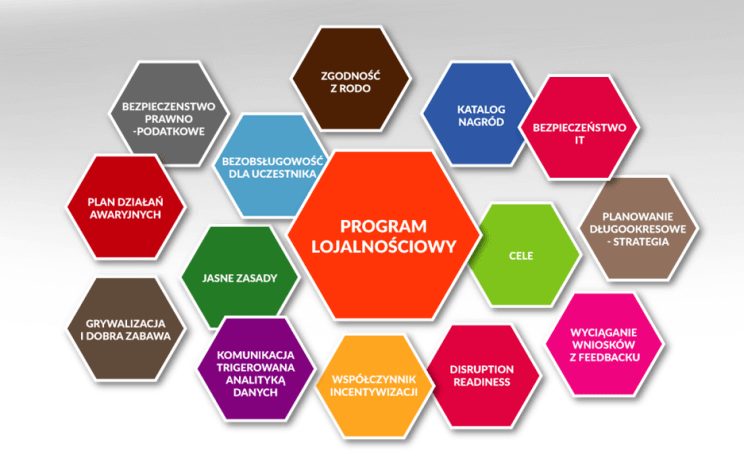
We have identified 14 factors that contribute to an effective B2B incentive scheme. The most important of these are: clear objectives and rules, data security, attractive rewards, minimising the burden on participants, and long-term planning. The full list is set out in the chart below.
Diversity of target groups
In the purchasing process within the building materials sector, a number of independent influence groups will be involved. Their arguments and actions have a significant impact on the final choice of a particular brand’s product. Consequently, the programmes are aimed at:
- Architects
- Decision-makers at retail outlets
- Customer advisers
- Contractor teams
- Sales representatives (in-house and distributors)
The target groups outlined do not overlap. For example, an architect is unlikely to own a retail outlet, just as contractors are not usually architects. Nevertheless, representatives of each of these groups have a significant influence on the customer’s decision to choose a particular product brand. Manufacturers therefore set specific targets for them, encouraging them to take action – their aim is to drive sales of the brand’s products covered by the incentive scheme.
How does this work in practice? Retail outlets are required to stock a specific product range, ensure attractive displays of goods and promotional materials, and take part in special training sessions. Sales teams, meanwhile, are required to document the purchase of products in the appropriate quantities on an annual basis, within a specific product mix. Architects and customer advisers, in turn, must focus on making recommendations; therefore, the greatest challenge is the ability to measure the effectiveness of these recommendations.
Benchmark – key findings
- The role of indirect sales. In Poland, the majority of building materials are sold through retail outlets or wholesalers. Consequently, incentive schemes are mainly based on copies of proof of purchase. Participants must provide evidence of each instance where the conditions (relating to the sale or purchase of a given product) have been met. In a sense, this means that this distribution channel still needs to develop further. At the same time, programme operators need to demonstrate considerable operational efficiency, as they handle a massive volume of documents. To this end, automated processes utilising machine learning are usually employed, which allows the process of calculating points to be automated on the basis of hundreds of thousands of scans of accounting documents.
- Settlement based on purchase documentation. Programmes involving the cutting out of parts of packaging can still be found. However, they are gradually being replaced by printed details, individual numbers or codes – sent via text message, entered on a website or scanned using a mobile app. Such initiatives require a tried-and-tested IT system to run the programme, complete with loyalty engine functionality. It is very important that this system complies with the international information security standard ISO 27001:2013.
- The distinct nature of the terms and conditions of trade and the incentive scheme. Combining communication arising from commercial terms with B2B programmes is a real challenge. Among other things, it is essential to skilfully distinguish the benefits for each of these sources, as well as to tailor the scope of information provided to owners, shop staff and decision-makers. It is important to maintain an appropriate level of motivation within each group, whilst ensuring data confidentiality. In this regard, specialised dashboards showing the status and results of the programme are extremely useful.
- The role of appropriate education and training. Given the numerous technical aspects involved, specialised training delivered as part of incentive programmes is extremely important. Knowledge is imparted via blogs, e-learning, webinars, YouTube videos and face-to-face sessions. The most important factor is the ability to integrate the IT system supporting the programme with the tools used for teaching, or to have a dedicated e-learning module within the management software. In this way, the software will award participants points for completing tests, whilst also providing an appropriate assessment based on the results achieved.
- Segmentation of participants. The target groups are very diverse. They specialise in different types of work, and the scale of the renovation and construction projects they undertake also varies. For this reason, it is necessary to segment the participants. The main ones are the so-called VIP groups, which can be joined after accumulating a certain number of points. The main benefits of this membership are:
- Priority in the allocation of points;
- Participation in special events;
- Sales reporting based on:
- Invoices issued to the investor,
- Lists;
It is particularly worth noting the names given to participant segments, such as: friend, professional and VIP. Using terms that evoke specific emotions is far more effective than neutral, generic names such as: bronze, silver, gold or mini, standard, max. Participants with higher status receive, amongst other things, point multipliers that allow them to accumulate points more quickly. They often also gain access to additional sections of the catalogue featuring more valuable rewards. In some cases, participants are also segmented based on their specialisation.
- A comprehensive fraud management system. In the construction industry, the risk of operating in the so-called ‘grey economy’ is particularly high. Operators of incentive schemes must therefore safeguard all IT systems against attempts at abuse and fraud. When running incentive schemes in this sector, we frequently received reports flagged by the IT or audit departments as suspicious. These include, for example, attempts to submit the same invoices, false or forged proofs of purchase, or the submission of amended accounting documents, etc. To prevent such situations, it is essential to implement special algorithms and control processes.
An in-house logistics centre – the key to success
The professional, large-scale implementation of incentive schemes is only possible with an in-house logistics centre. The more programmes and participants involved, the greater the need for one. Efficient storage, collection and dispatch of rewards, as well as the automation of courier order management and the handling of parcels and documents, require the use of in-house logistics resources.
At i360, we manage a range of B2B incentive schemes. We also monitor the most significant examples of such schemes on the Polish market – in the building materials sector and beyond. We are happy to share our experience and observations with our clients.
Are you interested in implementing an incentive scheme? Or perhaps you need advice on how to improve your scheme – in terms of processes, legal matters, logistics or results? We invite you to contact!